Nathaniel Hogrebe, PhD, Instructor in Medicine in the Division of Endocrinology, Metabolism and Lipid Research at WashU Medicine, has received a K01 Mentored Research Scientist Development Award from the National Institute of Diabetes and Digestive and Kidney Diseases (NIDDK), part of the National Institutes of Health (NIH). The three-year award, which runs from September 15, 2025, through July 31, 2028, will support his project titled “Cytoskeletal regulation of gut tube organogenesis and subsequent maturation of stem cell-derived islets.”
The NIDDK K01 award aims to facilitate the transition of new investigators to research independence. Under the guidance of an experienced mentor, it provides 3-5 years of salary and research support for intensive career development to cultivate the experience needed to establish an independent research program.
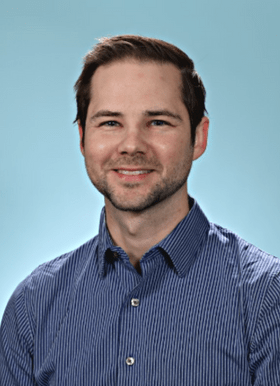
Dr. Hogrebe’s project aims to improve the generation and function of stem cell-derived islets (SC-islets) containing insulin-secreting β cells, which offer potential for a functional cure for type 1 diabetes. His research will investigate how a cell’s microenvironment and cytoskeletal state influence cell fate decisions during gut tube organogenesis and endocrine cell maturation. These insights could enhance the clinical effectiveness of SC-islets and deepen understanding of how cytoskeletal regulation affects endodermal cell development.
Successful completion of the project’s objectives will contribute both to the optimization of SC-islet generation for therapeutic use and to the broader field of developmental and cellular biology. Combined with his tailored Career Development Training Plan, this research will form the foundation of Dr. Hogrebe’s future program as an independent investigator focused on advancing cell-based therapies for type 1 diabetes.
A St. Louis native, Dr. Hogrebe earned his bachelor’s degree in Chemical Engineering from the University of Dayton and a PhD in Biomedical Engineering from Ohio State University. In 2016, he joined the Millman Lab at WashU Medicine as a postdoctoral fellow, where he applied his background in biomaterials and tissue engineering to improve the differentiation and function of SC-islets.
Dr. Hogrebe’s current research interests include improving the maturation and function of SC-islets by harnessing developmental biology approaches, generating immunoprotection strategies for cell transplantation, and developing large format culture methodologies for scalable SC-islet manufacturing. His work continues to advance the intersection of tissue engineering, developmental biology, and regenerative medicine in the pursuit of more effective treatments for type 1 diabetes.